
South Bay Home Health Care Team
Updated 5:19 PM CDT, Mon August 10, 2026
Published Under: Complex Rehab Technology Healthcare Partners
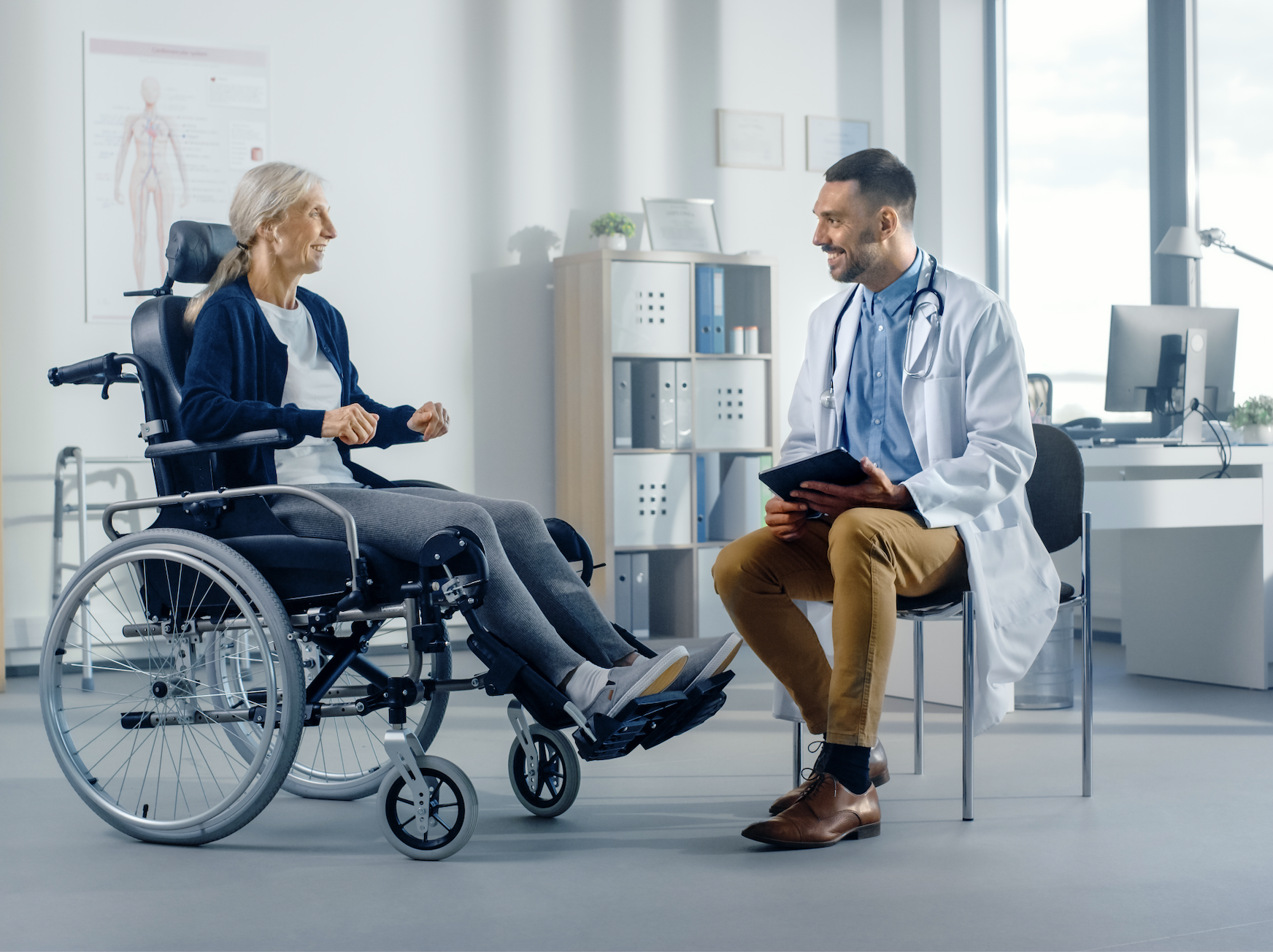
If you work in discharge planning, occupational therapy, or case management, you've likely encountered patients who need more than a standard wheelchair. Complex Rehab Technology — CRT — is the category of highly customized mobility equipment prescribed for individuals with significant, often permanent, functional limitations.
This post explains what a CRT evaluation actually involves, why it cannot be done remotely or through a basic DME supplier, and what referring providers can expect when working with South Bay Home Health Care's CRT team in Torrance.
What Is CRT?
Complex Rehab Technology refers to manually-operated or power wheelchairs and related seating and positioning systems that are individually configured to meet a patient's specific medical, physical, and functional needs.
CRT equipment is not off-the-shelf. It involves custom seating systems and positioning components, power or manual bases selected for the patient's environment and functional goals, and accessories configured for the patient's specific diagnosis and daily life.
Conditions commonly requiring CRT include ALS, cerebral palsy, muscular dystrophy, multiple sclerosis, spinal cord injury, and acquired brain injuries — among others.
Who Can Perform a CRT Evaluation?
Why It Has to Be Done In Person
A CRT evaluation is a hands-on clinical process. It cannot be done via telehealth, and it cannot be approximated by sending measurements to a vendor.
Physical assessment
The ATP assesses posture, range of motion, skin integrity, transfer ability, and upper extremity function. These observations directly drive equipment specification.
Seating simulation
Before any equipment is ordered, the patient sits in a seating simulator to trial different support configurations. What works in theory and what actually works for a specific patient's body are often different things.
Environment and lifestyle assessment
Where does the patient live? What surfaces will they navigate? Do they drive? What are their daily activities? These factors determine base selection, power configuration, and accessories.
Documentation
The ATP generates the clinical justification documentation required for insurance prior authorization — a process that requires specificity that only comes from direct evaluation.
What Referring Providers Can Expect from SBHHC
South Bay Home Health Care has been providing CRT services in the South Bay for decades. Our process is designed to minimize burden on the referring provider while keeping the patient's clinical team in the loop.
We work directly with Medicare, Medi-Cal, and most major insurers
We handle prior authorization documentation
We coordinate scheduling directly with the patient
We communicate with the referring therapist throughout the process
Our repair center is co-located with our showroom at 1349 El Prado Ave — post-delivery service is handled by the same team that fit the equipment
If you have a patient who may be a CRT candidate, the most efficient next step is a direct conversation.
1349 El Prado Ave, Torrance, CA
(800) 464-3258
(310) 388-5980
Mon–Fri 9AM–5PM
We also accept referrals through the Parachute portal.
Frequently Asked Questions
How do I know if my patient qualifies for CRT?
Generally, CRT is appropriate for patients with permanent or long-term conditions resulting in significant functional limitations requiring a customized mobility system. If you're unsure, call us — our ATP can do a brief consultation to assess candidacy.
What does SBHHC need from the referring provider?
A prescription/order, relevant clinical notes (diagnosis, functional limitations), and ideally a PT/OT who can participate in or have input into the evaluation. We'll guide you through the specifics.
How long does the CRT process take from referral to delivery?
Insurance authorization timelines are the largest variable and can range from weeks to a couple of months depending on the insurer and complexity. We'll keep you informed throughout.
Does the patient need to come to your location?
Yes — the evaluation is conducted at our Torrance showroom, which has the seating simulation equipment required. In some cases we can coordinate home assessments; contact us to discuss.
What happens if the equipment needs adjustment after delivery?
Our repair and service center is in the same facility as our showroom. Post-delivery adjustments and repairs are handled by the same team.